what size crochet hook to use for a childs hat ages 7-10
Like many crocheters, 1 of the first things I always made to gift was a hat.
It was one of the owl hats from Echo Crafter Me to be precise. Merely I got the sizing all wrong because dorsum then I didn't understand what yarn weights were all about.
Information technology was a valuable early lesson and the kickoff of my curiosity about what I now sympathise to be gauge.
Crochet Hat Size Guide – What's covered in this postal service
This post explains what I take learned near sizing hats over my years equally a maker and designer and includes my complete guide to hat sizing, for whatsoever yarn wight and hook size.
The table at the finish volition tell you how many stitches you need to crochet around the circumference of your hat, to attain a specific size.
I encourage you to read the whole article (almost 10 mins) and so you can understand where these figures came from and how to best utilise them when making your own crochet hats.
This guide focuses on the circumference of the finished hat and does not offer guidance for hat height.
There are plenty of hat height charts on the internet which offer a rough guide to hat superlative. However, I recall that the pinnacle of the chapeau depends then much on the style that information technology's not something I think you can easily standardise.
That said, I have included a 'standard' crown to base of ear measurement though every bit I think this is valuable information when crocheting a chapeau. It gives you a minimum hat height size, which is a proficient place to start!
The circumference measurements are based on Woolly Wormhead'due south hat size guide, the Craft yarn council standards and a variety of other hat sizing guides from the internet
I exercise non address hat heights in this post because it is dependent on the mode of hat y'all want to brand, but the Woolly Wormhead sizing guide has some standard crown to base of operations of ear measurements which yous may find helpful.
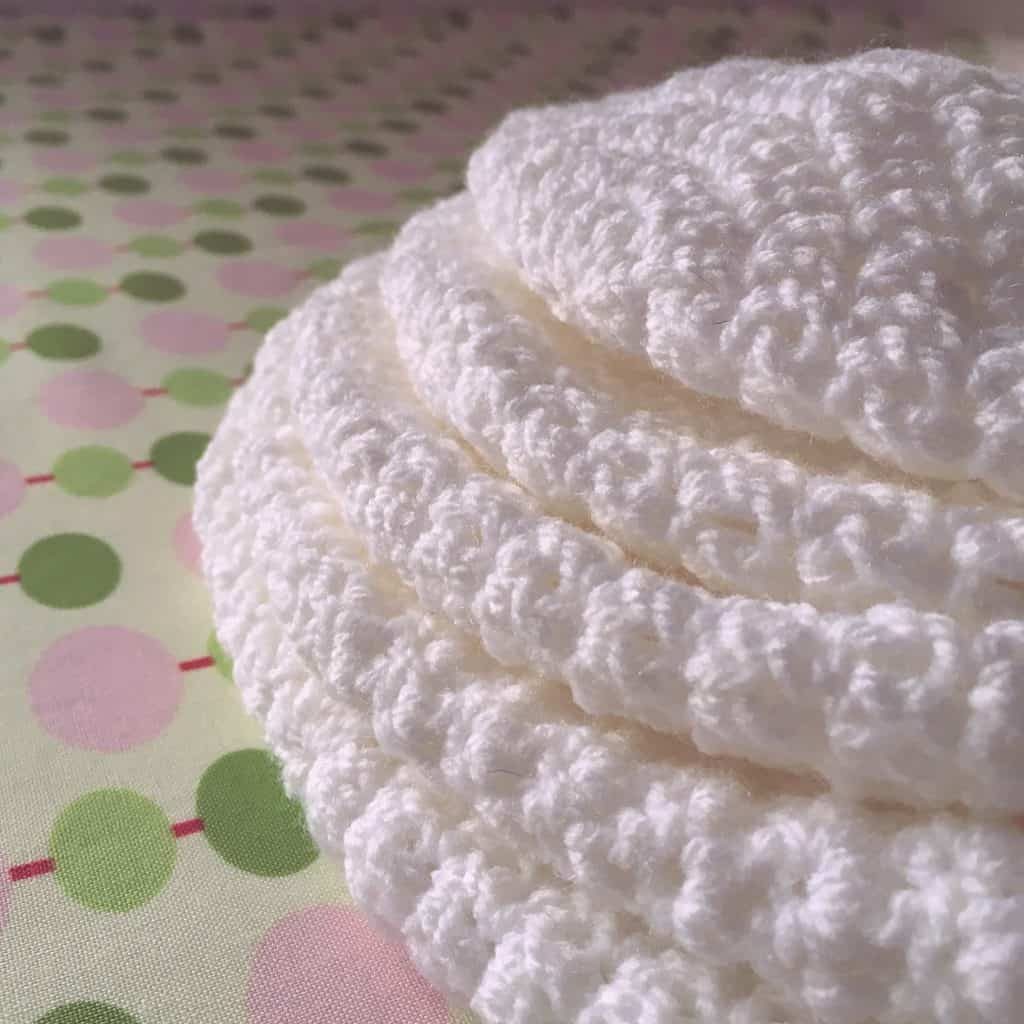
How I size crochet hats
After I understood my classic yarn weight mistake, I started making a record, (scribbled in the back of one of my crochet note books), of the hats I made; what the finished size was, what size hook I used and how many stitches there were in the finished circumference.
Early on in my crochet career, I tried out selling finished objects. Dorsum in 2013, I must have made thirty minion hats that Christmas and I apace learned that making finished objects to sell was not for me!
However, this was an incredibly valuable exercise in learning nearly chapeau sizing and adding data to my petty hat size nautical chart.
I had found so much variation in the lid size charts and size guides I looked at on the net that I figured I would use my own information, which I knew worked for my crochet style (i.eastward. my gauge).
My table included hat size / age, hook size, and the final number of stitches needed before you stopped increasing to achieve the correct circumference. This was all based on typical acrylic DK yarn.
When I started Dora Does, I knew I wanted to aid others avoid the same mistakes I had made by sharing this data, which had become so valuable to me. (It was how I sized my first always lid pattern, the Christmas Pudding Chapeau).
But I knew that something was missing from my data. I had to account for yarn weight somehow to make this accurate and I wasn't sure how to do this so I set the thought aside in favour of other projects.
Always since I started Dora Does, I knew that I wanted to publish this information, then that others could salve themselves the fourth dimension.
Until I had a revelation…
The answer came to me in the shower (where I have all my best ideas).
So often yous observe the solution to a trouble when you're looking at something i step abroad from it! And it feels so blindingly obvious now, that I don't understand why I didn't recall if it sooner. Only that is the ability of experience!
The respond is maths (and judge)…
Simply don't worry, I'll do the heavy lifting for you
That week, I was grading a kids sweater pattern and was worried about whether it would easily fit over the wearer'southward caput. I had been looking at head size charts to check that the width of the neckline was larger than the diameter of the child'southward head.
So in that location I was in the shower, questioning whether I had done the maths right (was it pi x d or Pi r squared? My school maths retentivity was wavering), thinking most head circumference (similar you exercise), when the idea of hat sizing bubbled upwardly from my hidden where it had been languishing.
I realised that all I needed to size a hat was the estimate measurement and the required caput circumference. Those worries about needing a different chart for each yarn weight were unfounded.
It doesn't matter what claw size or yarn yous are using considering, every bit I've learned through my many posts well-nigh it this year… it'due south most guess.
Gauge is the primal!!
So I put the pattern I was working on to one side and set about creating a new tabular array showing how many stitches yous'll need for x gauge to brand a hat measuring y circumference.
That is what you will find in the chart below.

Hat structure styles and sizing
For those newer to making hats, the classic way to work a summit-downwardly beanie (regardless of sew design) is to work a flat circle from the heart out, increasing by the same number of stitches each circular. Then you stop increasing and piece of work in rounds until the chapeau curls round and reaches the desired length.
This was the style I had in mind when coming up with this information, but it will work for other construction styles if appropriately adapted.
Why is this crochet hat size guide different from other lid size chart?
In that location are a many resources which size hats by telling you to increase your flat circle until your diameter reaches X cm / inches, then stop increasing and work the same number of stitches around the trunk of the lid until you attain the desired length.
These are excellent guides, but I ever struggled with that method because and so often the required bore vicious betwixt 2 rounds – which would frequently brand all the divergence.
This approach of measuring the flat crown also doesn't business relationship for hats which aren't made with a flat circumvolve. If your lid has a little more than shape, a pointy crown maybe, then your circle is non going to be flat, and this method may pb you upwards the garden path.
This is why I prefer to use gauge.
Once you've done your gauge swatch, you tin start making your hat, already knowing the concluding sew together count you need.
Then you just need to piece of work backwards to decide how to accomplish it with your increases (assuming you're using the flat circle method discussed earlier).
This post near how to summate increases in the round may help you work out how to space your increases.
The final stitch count you need to accomplish won't always be prissy corking multiples of the number of your stitches in your magic ring. I get around this by working increasing my the same multiple until the numbers don't add up any more, than working only enough (evenly distributed) increases in my last increase circular to achieve the number I desire.
Sizing hats with stitch multiples
For those of you designing or freestyling your chapeau, and then you will also demand to call up nearly things similar stitch multiples.
If you're just working with a unmarried stitch, and then it's like shooting fish in a barrel to add a couple of stitches to the last increase round to get your numbers correct.
Even so, if y'all're working with a run up multiple for your crochet run up pattern, and so the way you increase will require some additional thought.
The chances are, the number of stitches yous need for your finished circumference are not neatly divisible by your stitch multiple.
In this situation, and because a chapeau should be smaller than the head it is meant to fit (i.e. take negative ease) then I would ever tend to go with fewer multiples rather than more than.
Chapeau sizing and negative ease
Hats should ordinarily accept negative ease (exist smaller than the head they are made to fit) so that they stretch and stay on your head.
I recently learned from Woolly Wormhead, who is the master of knit and crochet hats, that she uses around 12% negative ease for her hat sizing. That is, the hat should be 12% smaller than the head it is designed to fit.
I likewise apply the the 2 inch rule (i.due east. make the hat 2 inches smaller than the head), to work out my final hat size.
Nevertheless, the corporeality of negative ease will depend on the stretch of the stitch pattern you're working with. This is a variable that is hard to accommodate and is something you'll need to assess when making.
For example, I worked with much more than negative ease in the fisherman's winter beanie considering the cloth is then stretchy.
Stitch pattern, stretch and hat sizing
When y'all're making a lid, you'll demand to think about the properties of the stitch pattern y'all're using.
Every bit already mentioned, some run up patterns have a huge amount of stretch and others very little, but on tiptop of this, you'll want to think virtually elasticity. Does the fabric bounce back?
This amount of stretch will touch the amount of ease y'all want and therefore the terminal circumference size you lot want to brand.
This is especially important for the brim if information technology is the part of the hat that is securing it on the head.
For a stitch pattern with very little stretch, you want a smaller amount of ease (so a larger circumference), whereas for stitch patterns with a lot of stretch, you lot'll want to make the hat smaller.
All the sizes hither are only a guide ultimately. You may need a little trial and mistake hither to accommodate a very stretchy or inflexible crochet fabric.
Crochet ribbing and hat brims
The part of a typical beanie or bobble hat that actually needs to fit is the skirt. This is the area where you need that negative ease to proceed it on your head.
Crochet ribbbing is used a lot on crochet hats as tends to have more than elasticity than other stitch patterns. Then no discussion of hat sizing and fit wold exist complete without touching on this area.
I've been experimenting recently with many types of crochet ribbing, and have put together a 2 part directory sharing all the different ways yous tin crochet a rib effect and comparing the elasticity and stretch of each method.
I have included a video in each post showing how each type stretches and bounces back. This is particularly useful for thinking about which type of ribbing you might want to add to a hat. The more rubberband the better for a longer lasting lid.
Part i of the rib run up directory looks at crochet ribbing using the back and front end loop only methods. (View information technology here)
Function 2 looks at crochet ribbing using forepart and back mail stitches (view information technology hither)
Furthermore, a while back I created a written and video tutorial showing how to hands add ribbing to a top down crochet lid without sewing. This tin be used for nigh styles of vertical ribbing. Some adaptation may be required but the principle is generally the same.
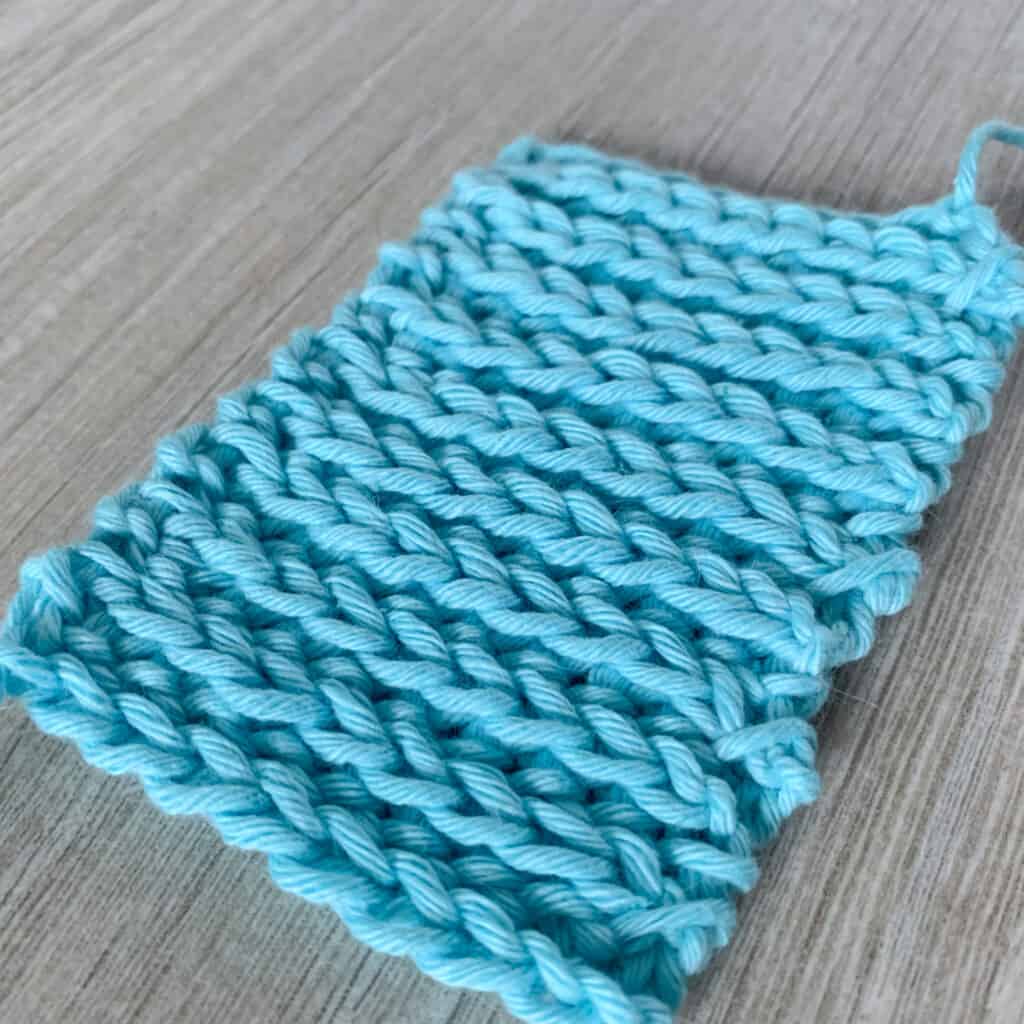
Okay, now time to get to the information!
How many crochet stitches do I need to make a hat fit?
I have created ii tables to assist with your hat sizing.
The beginning, below, is a rough guide to head sizes for different age groups. This is a guide just and it is why information technology is given as ranges.
In older versions of my hat size guide, I gave specific values, but the more I enquiry head sizes, the more variation I find in sizing. And so I settled on a range as a starting point for you lot. Ideally you will want to measure out the caput y'all are making the lid for and so deduct the ease to decide how big your finished hat will be.
I have left in the apartment crown bore measurement in the table equally an judge reference point only.

Once you know how big you want your chapeau to exist, the 2nd table comes into play. It shows you lot how many stitches you need to work, based on stitch judge (listed down the left column), to achieve a specific finished hat circumference (listed along the top).
To read the chart, simply select the finished hat circumference you want to brand from forth the top, then choose the gauge your stitch pattern uses (because you Accept made a gauge swatch!) from down the side, and read down and across to find the number of stitches the body / brim of your chapeau needs to reach the chosen hat circumference.

Annotation that because of the inconsistency in lid sizing for dissimilar historic period groups, I have removed this aspect from the run up count table and given size options in 2.5cm / 1 inch increments.
If you desire to work out the number of stitches for a measurement not listed, this mail explains how to calculate your stitch count for any measurements based on gauge.
Assumptions and notes
As you look at the data, in that location are a few other assumptions I'm working with that you'll demand to know.
This table was worked with hats worked tiptop downwardly in the round in mind.
Though there is no reason information technology wouldn't work for other styles where the run up gauge is used for the circumference.
If you are working a hat structure which is side to side, you will demand to switch run up approximate for row gauge to use the table (as the rows are what form the circumference).
If yous have never made a guess swatch before, you tin can learn how to do so (and why you should) hither.
I hope yous detect this data useful.
Happy Lid Hooking!
Dx
Source: https://doradoes.co.uk/2019/08/28/how-many-stitches-does-my-crochet-hat-need-to-fit-doras-ultimate-guide-to-accurately-sizing-a-crochet-hat/

Postar um comentário for "what size crochet hook to use for a childs hat ages 7-10"