What Is the Paralysis of the Lower Extremities Due to Spinal Cord Injury Called
Continuing Pedagogy Activity
Spinal cord injury (SCI) is a serious medical condition, which frequently results in severe morbidity and permanent inability. It occurs when the axons of nerves running through the spinal string are disrupted, leading to loss of motor and sensory function below the level of injury. Injury is usually the result of major trauma, and primary injury is often irreversible. This activity outlines the evaluation and direction of SCI and reviews the role of the interprofessional team in evaluating and treating patients with this condition.
Objectives:
-
Identify the etiology of medical weather condition and emergencies due to spinal cord injuries.
-
Outline the advisable evaluation steps for spinal cord injuries.
-
Review the direction options available for spinal string injuries.
-
Describe interprofessional team strategies for improving care coordination and communication to advance the direction of spinal cord injuries and improve outcomes.
Access free multiple selection questions on this topic.
Introduction
Spinal string injury (SCI) is a serious medical status, which often results in severe morbidity and permanent disability. It occurs when the axons of fretfulness running through the spinal string are disrupted, leading to loss of motor and sensory part below the level of injury. Injury is unremarkably the consequence of major trauma, and primary injury is oftentimes irreversible.[1] These injuries are particularly plush and disabling every bit they disproportionately affect patients under 30-years-sometime, lead to significant functional impairment for the remainder of the individual'south life, and put the private at take chances for numerous complications leading to increased morbidity and bloodshed.[2] SCI is estimated to have a lifetime economic impact of two to 4 billion dollars.[iii][four]
Etiology
Within the Us, the leading cause of spinal cord injury is motor vehicle collisions, constituting 38% of new SCI each year. 30% are due to falls, 13% due to violence, 9% from sports injuries, and five% from medical and surgical etiologies.[two]
Epidemiology
Globally, between 250,000 and 500,000 patients, each year suffer a spinal cord injury. Well-nigh of these cases are due to preventable causes such equally violence and motor vehicle accidents. In the U.s.a., there are approximately 17,000 new cases of SCI each year, and roughly 282,000 persons are estimated to be living with SCI.[two] Males stand for the majority of patients with SCI related to a sports injury. The age group with the highest chance of SCI is from 16 to xxx years of age.
Pathophysiology
Spinal string injuries are about oft due to either direct trauma to the spinal cord or from compression due to fractured vertebrae or masses such as epidural hematomas or abscesses. Less commonly, the spinal cord may become injured due to compromise of claret flow, inflammatory processes, metabolic derangements, or exposure to toxins.
Principal Injury
SCI results from initial insult such equally mechanical forces to it, which is known as the primary injury. The virtually common mechanism of main injury is a direct impact, and persistent compression typically occurs past bony fragments through fracture-dislocation injuries. Contrary to fracture-dislocation, hyperextension injuries usually upshot in less frequent, affect alone plus transient pinch. The 3rd mechanism, lark injury, a stretch and tear of the spinal cord in its axial plane, occur by pulling apart of two adjacent vertebrae. Lastly, laceration/transection injury, which arises through abrupt bone fragments, severe dislocations, and missile injuries.[5]
Secondary Injury
Secondary injury is a series of biological phenomena that begins within minutes and go along to self-immolation for weeks or months post-obit the initial primary injury. The acute phase of secondary injury begins subsequently SCI and involves vascular damage, ionic imbalances, complimentary-radical formation, the initial inflammatory response, and neurotransmitter accumulation (excitotoxicity). The subacute phase follows, which includes demyelination of surviving axons, Wallerian degeneration, matrix remodeling, and germination of the glial scar.[5]
Allowed Response Spinal String Injury
Neuroinflammation can be either beneficial or detrimental following SCI, providing fourth dimension-point and the state of immune cells. The first iii days following SCI, inflammatory events involve recruiting blood-built-in neutrophils resident microglia and astrocytes to the injury site. The second phase, approximately three days mail-injury, enrolls macrophages, B- and T-lymphocytes to the injury site. CD4+ helper T get activated by antigen-presenting cells and release cytokines that subsequently stimulate B cell to synthesize and release antibodies, which exacerbate neuroinflammation and subsequent tissue destruction. Neuroinflammation is more robust in the acute phase of SCI.
Ongoing inflammation may persist in subacute and chronic phases, even for the residue of a patient'due south life. Inflammatory jail cell composition and phenotype alter according to the phase of inflammation and the signals existing in the injury microenvironment. T cells, B cells, and microglia/macrophages are capable of gaining either pro-inflammatory or an anti-inflammatory pro-regenerative phenotype.[5]
Disruption of nerve axons running through spinal cord tracts leads to loss of motor and sensory function below the level of injury. Patterns of disability are dependent on the level of the injury and which spinal tracts are affected.[six][7]
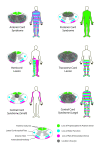
Spinothalamic tracts run inside the anterior aspect of the spinal cord. These nerve axons carry sensory information for pain and temperature. Impairment to these tracts leads to contralateral loss of pain and temperature sensation. Corticospinal tracts run within the lateral aspects of the spinal cord. These nerve axons control motor role. Damage to these tracts leads to ipsilateral weakness or paralysis. In the cervical spine, axons leading to the upper extremities are located close to the heart of the spinal cord.
In dissimilarity, axons leading to the lower extremities are located on the periphery. The dorsal columns run within the posterior aspect of the spinal string. These tracts deport information for tactile, proprioceptive, and vibratory sensation. Harm to these tracts leads to contralateral loss of tactile, proprioceptive, and vibratory sensation.
History and Physical
Typically patients will present later on a significant traumatic event such as a motor vehicle blow, fall from a height, or gunshot wound. Vitals are unlikely to be abnormal, although high cervical injuries can result in hypotension and bradycardia due to loss of sympathetic tone. The physical exam volition reveal weakness and sensory deficits correlating to the pattern of injury, and the spinal tracts affected. Several classic patterns of injury are well described.[half dozen][7][8]
Consummate Transection of the Spinal Cord [9]
-
These injuries typically demonstrate complete bilateral loss of motor function, hurting awareness, temperature sensation, proprioception, vibratory sensation, and tactile sensation below the level of injury.
-
Lumbosacral injuries will nowadays with paralysis and loss of sensation in the lower extremities. These injuries may as well issue in loss of bowel command, loss of bladder control, and sexual dysfunction.
-
Thoracic injuries atomic number 82 to the aforementioned deficits as lumbosacral injuries and, in addition, may result in loss of part of the muscles of the torso, leading to difficulty maintaining posture.
-
Cervical injuries lead to the same deficits as thoracic injuries and, as well, may outcome in loss of part of the upper extremities leading to tetraplegia. Injuries to a higher place C5 may also cause respiratory compromise due to loss of innervation of the diaphragm.
Primal Cord Syndrome
-
This is the most common incomplete SCI.
-
Injury is caused by hyperextension of the neck leading to compression of the cervical spinal cord, causing damage primarily to the centre of the cord.
-
This pattern of injury leads to weakness affecting the upper extremities more so than the lower extremities. This design occurs as the corticospinal tracts are bundled with those axons supplying the upper extremities located closer to the center of the spinal string, while those supplying the lower extremities are closer to the periphery.
-
There may also be an associated loss of pain and temperature awareness below the level of injury.
Anterior String Syndrome
-
Classically due to compromise of blood flow from the inductive spinal avenue.
-
Bilateral injury to the spinothalamic tracts leads to bilateral loss of hurting and temperature sensation below the level of injury.
-
Bilateral injury to corticospinal tracts leads to weakness or paralysis beneath the level of injury.
-
Every bit dorsal columns are unaffected, tactile awareness, proprioception, and vibratory sensation remain intact.
Posterior Cord Syndrome
-
This injury pattern rarely occurs due to trauma. More often, injury is due to infectious, toxic, or metabolic causes.
-
Damage to dorsal columns causes loss of tactile sensation, proprioception, and vibratory sensation.
-
Every bit spinothalamic and corticospinal tracts are unaffected, in that location is the preservation of hurting sensation, temperature sensation, and motor part.
Brownish-Séquard Syndrome [ten]
-
Injury results from correct or left-sided hemisection of the spinal cord.
-
Transection of the corticospinal and dorsal column nerve tracts leads to ipsilateral loss of motor function, tactile awareness, proprioception, and vibratory sensation below the level of injury.
-
Transection of the spinothalamic tract leads to contralateral loss of pain and temperature sensation beneath the level of injury.
Conus medullaris Syndrome
-
Information technology is caused by injury to the last aspect of the spinal cord, just proximal to the cauda equina.
-
It characteristically presents with loss of sacral nervus root functions. Loss of Achilles tendon reflexes, bowel and float dysfunction, and sexual dysfunction may exist observable.
Neurogenic Shock [11][1]
-
Information technology results from loftier cervical injuries affecting the cervical ganglia, which leads to a loss of sympathetic tone.
-
Loss of sympathetic tone results in a daze land characterized past hypotension and bradycardia.
Evaluation
Every bit spinal cord injuries near often occur in the context of meaning trauma, a comprehensive physical examination and clinical cess for concurrent injuries are necessary at the time of presentation. Recognition of the to a higher place injury patterns tin can assist localize the location and type of injury suffered. Clinical examination with a detailed and accurate examination of motor and sensory fretfulness is essential for nomenclature.
SCI is graded using the American Spinal Injury Association (ASIA) Impairment Scale. The grading system varies based on the severity of injury from letters A to E.[12]
-
ASIA A: Complete injury with loss of motor and sensory function.
-
ASIA B: Incomplete injury with preserved sensory function, but complete loss of motor function.
-
ASIA C: Incomplete injury with preserved motor part below the injury level, less than half these muscles accept MRC (Medical Research Council) form 3 strength.
-
ASIA D: Incomplete injury with preserved motor function beneath the injury level, at least half these muscles have MRC (Medical Research Council) class three force.
-
ASIA East: Normal motor and sensory test.
Imaging is vital to place the injuries accurately. Evidently radiographs accept been used traditionally, however with advancing applied science and poor sensitivity with patently radiographs, computerized tomography (CT or Cat scan) has been replaced as the initial screen to identify bony abnormalities similar fractures. CT can reveal vertebral fractures and enhance suspicion for SCI; withal, it has very poor sensitivity for soft tissue injuries. Magnetic resonance imaging (MRI) is needed to accurately assess the level of injury to the spinal cord itself.[13][14] MRI tin can assistance with prognostication, and several clinical scores use this to predict prognosis.[fifteen] Early spinal string injury findings see on an MRI include spinal string compression, spinal string contusion, spinal cord edema, spinal cord transection, spinal cord hemorrhage, and ligamentum flavum bulging.[sixteen] Subacute findings include spinal string edema, subacute progressive ascending myelopathy, and syrinx.[17]
Other associated imaging findings may include:[14]
-
Traumatic disc herniation: Seen with vertebral disc dislocations and hyperextension injuries. Nucleus pulpous herniation and annulus fibrosus herniation are seen in this condition.
-
Epidural hematoma
-
Pseudomeningoceles
-
Extradural fluid collections
-
Vascular injuries of arteries like the carotid artery, vertebral artery, etc.,
-
Vertebral fractures
Handling / Management
Treatment begins at the site of injury and paramedics, and emergency medical services staff can play a pregnant role in stabilization before transfer to the hospital. Immobilization tin aid prevent the worsening of whatever existing injuries. In the case of serious trauma, accost any life threats or concurrent traumatic injuries immediately.
Hypotension and stupor volition worsen the impact of any existing SCI and worsen the likelihood of neurologic recovery. Firsthand measures are necessary to maintain breathing and hemodynamic stability. Surgical decompression may be warranted if feasible to lessen the extent of the injury.[ane][eighteen][19] This procedure helps to stabilize the spine, to foreclose pain, reduce deformity, deliver compression from a herniated disc, blood jell, or foreign torso.
Patients with SCI are best managed in neurological intensive care units with expertise in managing such patients. Defended trauma units must be identified and designated to transfer and intendance for these patients.
Rehabilitation is an integral part of healing, and these patients have the all-time possible outcomes with intense rehabilitation therapy under the guidance of physiatrists, concrete therapists, and occupational therapists. Rehabilitation is to be connected on an outpatient basis once the patient is fix for discharge from the inpatient rehabilitation unit.
Several medications take had trials to assistance with improving outcomes in SCI, but the results have non shown pregnant benefits. Trials with nimodipine, gacyclidine, thyrotropin-releasing hormone, riluzole, gangliosides, minocycline, magnesium, acidic fibroblast growth factor have been studied to meet their impact on improvement in patients with SCI.[3][20][21][22][23][24][25] At the current time, further research is necessary with regards to these agents, and high dose steroids are the mainstay for acute treatment of SCI.
Differential Diagnosis
The diagnosis of spinal cord injury will likely be relatively precise based on the patient'south presentation, which volition probably exist following a major traumatic event.[1] Nonetheless, when the time of onset and preceding events are less articulate, a broader differential for motor and sensory deficits should be considered.
Central Nervous System Pathologies
-
Cerebrovascular blow (CVA)
-
Postictal (Todd) paralysis
-
Hemiplegic migraine
-
Multiple sclerosis
Peripheral Nervus Pathologies
-
Guillain-Barré syndrome
-
Transverse myelitis
-
Tick paralysis
Neuromuscular Junction Pathologies
-
Myasthenia gravis
-
Organophosphate toxicity
-
Botulism
Other Pathologies
-
Hypoglycemia
-
Hypokalemic periodic paralysis
-
Hypocalcemia
-
Diabetic neuropathy
-
Conversion disorder
Prognosis
The prognosis for patients with spinal cord injury is very poor. Unfortunately, there is no definite treatment leading to recovery for SCI. Less than 1% of patients with SCI recover complete part before the time of hospital belch. The level of disability suffered directly correlates to the level of injury, with higher-level injuries resulting in more meaning disability and higher complication rates. Patients will SCI suffer significantly increased mortality in the first year following injury, and those that survive still take decreased life expectancy. Simply 12% keep to agree employment, and less than one one-half will become married.[2]
Complications
Spinal cord injuries are associated with numerous complications such equally urinary tract infections, pressure sores, deep vein thromboses, autonomic dysreflexia, and chronic hurting.
Autonomic dysreflexia occurs in individuals with SCI at or above thoracic spinal level 6 (T6). This status oftentimes manifests every bit orthostatic hypotension. The symptoms of orthostatic hypotension are often challenging to treat. Symptomatic management with intestinal binders, elastic stockings, peripheral vasoconstrictor medications like midodrine, and mineralocorticoids like fludrocortisone can help. Increased salt intake can likewise help with volume expansion and assistance with symptom control.
There are also significant indirect costs through lost mobility, inability to work, and heavy caregiver burden.[19][26]
The most common causes of mortality are pneumonia and sepsis.[2]
Deterrence and Patient Education
Spinal cord injury is very stressful and overwhelming for the patient and the families. Patient education must be an important part of the clinical management of patients with this status. Counseling is necessary regarding prognosis, complications, and outcomes. Back up groups can help with the management of issues similar feet, frustration, loneliness, and depression. The patient should receive counsel most the diagnosis and the prognosis. Prevention centers can help with mitigating factors leading to traumatic injuries like improvement in motor vehicle prophylactic, gun command, and social programs aimed at the prevention of violence.
Enhancing Healthcare Team Outcomes
Once a patient has suffered spinal cord injury, their quality of life and life expectancy is dependent upon continued well-coordinated care between an interprofessional healthcare team. A team approach is platonic for helping mitigate the many complications that tin upshot from SCI [xix][26]:
-
Evaluation by a neurosurgeon at the fourth dimension of injury can help minimize the extent of the initial injury.
-
Nursing intendance tin can forbid catheter-associated urinary tract infections, pressure sores, and aspiration pneumonia from occurring.
-
Physical and occupational therapists tin can help maximize the patient's level of office.
-
Social workers can coordinate disability services and reimbursements.
-
A psychiatrist should be available to assist the patient with low, which is common post-obit SCI.[27]
-
Pain management specialists can help manage ongoing problems with chronic hurting.
Review Questions

Figure
ASIA scoring sheet for determining level and extent of spinal cord injury. Useful for physical examination and assessment in all patients with spinal cord injury. Contributed past American Spinal Cord Injury Clan
Effigy
Comparison of spinal cord lesions and syndromes with respective sensory/motor deficits. Contributed past Rian Kabir, MD
References
- 1.
-
Eckert MJ, Martin MJ. Trauma: Spinal Cord Injury. Surg Clin N Am. 2017 October;97(5):1031-1045. [PubMed: 28958356]
- 2.
-
Spinal String Injury (SCI) 2016 Facts and Figures at a Glance. J Spinal String Med. 2016 Jul;39(iv):493-4. [PMC free article: PMC5102286] [PubMed: 27471859]
- iii.
-
Varma AK, Das A, Wallace G, Barry J, Vertegel AA, Ray SK, Banik NL. Spinal string injury: a review of current therapy, future treatments, and basic science frontiers. Neurochem Res. 2013 May;38(v):895-905. [PMC free article: PMC4103794] [PubMed: 23462880]
- 4.
-
McDaid D, Park AL, Gall A, Purcell M, Bacon Grand. Understanding and modelling the economic affect of spinal cord injuries in the United Kingdom. Spinal Cord. 2019 Sep;57(ix):778-788. [PMC free commodity: PMC6760568] [PubMed: 31086273]
- 5.
-
Alizadeh A, Dyck SM, Karimi-Abdolrezaee S. Traumatic Spinal Cord Injury: An Overview of Pathophysiology, Models and Astute Injury Mechanisms. Front Neurol. 2019;10:282. [PMC free article: PMC6439316] [PubMed: 30967837]
- 6.
-
Kirshblum SC, Biering-Sorensen F, Betz R, Burns S, Donovan Due west, Graves DE, Johansen G, Jones L, Mulcahey MJ, Rodriguez GM, Schmidt-Read Thousand, Steeves JD, Tansey 1000, Waring Westward. International Standards for Neurological Classification of Spinal Cord Injury: cases with classification challenges. J Spinal String Med. 2014 Mar;37(2):120-seven. [PMC free article: PMC4066420] [PubMed: 24559416]
- seven.
-
Kirshblum SC, Burns SP, Biering-Sorensen F, Donovan Due west, Graves DE, Jha A, Johansen G, Jones L, Krassioukov A, Mulcahey MJ, Schmidt-Read Grand, Waring West. International standards for neurological classification of spinal cord injury (revised 2011). J Spinal String Med. 2011 November;34(6):535-46. [PMC free commodity: PMC3232636] [PubMed: 22330108]
- 8.
-
Waring WP, Biering-Sorensen F, Burns S, Donovan Due west, Graves D, Jha A, Jones L, Kirshblum S, Marino R, Mulcahey MJ, Reeves R, Scelza WM, Schmidt-Read M, Stein A. _ 2009 review and revisions of the international standards for the neurological nomenclature of spinal cord injury. J Spinal Cord Med. 2010;33(iv):346-52. [PMC costless commodity: PMC2964022] [PubMed: 21061894]
- 9.
-
Waters RL, Adkins RH, Yakura JS. Definition of complete spinal string injury. Paraplegia. 1991 Nov;29(9):573-81. [PubMed: 1787981]
- ten.
-
Roth EJ, Park T, Pang T, Yarkony GM, Lee MY. Traumatic cervical Dark-brown-Sequard and Brown-Sequard-plus syndromes: the spectrum of presentations and outcomes. Paraplegia. 1991 Nov;29(9):582-9. [PubMed: 1787982]
- 11.
-
Dave S, Cho JJ. StatPearls [Internet]. StatPearls Publishing; Treasure Island (FL): Feb 19, 2021. Neurogenic Shock. [PubMed: 29083597]
- 12.
-
Roberts TT, Leonard GR, Cepela DJ. Classifications In Brief: American Spinal Injury Association (ASIA) Harm Calibration. Clin Orthop Relat Res. 2017 May;475(5):1499-1504. [PMC free article: PMC5384910] [PubMed: 27815685]
- 13.
-
Ellingson BM, Salamon N, Holly LT. Imaging techniques in spinal cord injury. World Neurosurg. 2014 Dec;82(half dozen):1351-8. [PMC free commodity: PMC3980138] [PubMed: 23246741]
- 14.
-
Kumar Y, Hayashi D. Office of magnetic resonance imaging in acute spinal trauma: a pictorial review. BMC Musculoskelet Disord. 2016 Jul 22;17:310. [PMC costless commodity: PMC4957861] [PubMed: 27448661]
- 15.
-
Wilson JR, Grossman RG, Frankowski RF, Kiss A, Davis AM, Kulkarni AV, Harrop JS, Aarabi B, Vaccaro A, Tator CH, Dvorak Chiliad, Shaffrey CI, Harkema Southward, Invitee JD, Fehlings MG. A clinical prediction model for long-term functional effect afterward traumatic spinal cord injury based on acute clinical and imaging factors. J Neurotrauma. 2012 Sep;29(xiii):2263-71. [PMC free article: PMC3430477] [PubMed: 22709268]
- 16.
-
Liu Q, Liu Q, Zhao J, Yu H, Ma 10, Wang L. Early MRI finding in adult spinal cord injury without radiologic abnormalities does not correlate with the neurological outcome: a retrospective written report. Spinal String. 2015 Oct;53(ten):750-3. [PubMed: 25777331]
- 17.
-
Chandra J, Sheerin F, Lopez de Heredia Fifty, Meagher T, King D, Belci M, Hughes RJ. MRI in acute and subacute post-traumatic spinal cord injury: pictorial review. Spinal Cord. 2012 January;50(1):2-7. [PubMed: 22064660]
- 18.
-
Rouanet C, Reges D, Rocha Due east, Gagliardi V, Silva GS. Traumatic spinal cord injury: current concepts and treatment update. Arq Neuropsiquiatr. 2017 Jun;75(half dozen):387-393. [PubMed: 28658409]
- 19.
-
Jendelova P. Therapeutic Strategies for Spinal Cord Injury. Int J Mol Sci. 2018 Oct sixteen;19(ten) [PMC gratis article: PMC6214105] [PubMed: 30332844]
- twenty.
-
Wu JC, Huang WC, Chen YC, Tu TH, Tsai YA, Huang SF, Huang HC, Cheng H. Acidic fibroblast growth factor for repair of man spinal cord injury: a clinical trial. J Neurosurg Spine. 2011 Sep;15(3):216-27. [PubMed: 21663406]
- 21.
-
Freund P, Schmidlin East, Wannier T, Bloch J, Mir A, Schwab ME, Rouiller EM. Nogo-A-specific antibody treatment enhances sprouting and functional recovery after cervical lesion in developed primates. Nat Med. 2006 Jul;12(7):790-two. [PubMed: 16819551]
- 22.
-
Geisler FH, Dorsey FC, Coleman WP. Recovery of motor office after spinal-string injury--a randomized, placebo-controlled trial with GM-ane ganglioside. N Engl J Med. 1991 Jun 27;324(26):1829-38. [PubMed: 2041549]
- 23.
-
Pitts LH, Ross A, Chase GA, Faden AI. Handling with thyrotropin-releasing hormone (TRH) in patients with traumatic spinal cord injuries. J Neurotrauma. 1995 Jun;12(3):235-43. [PubMed: 7473798]
- 24.
-
Lee JH, Roy J, Sohn HM, Cheong Chiliad, Liu J, Stammers AT, Tetzlaff Westward, Kwon BK. Magnesium in a polyethylene glycol formulation provides neuroprotection later unilateral cervical spinal string injury. Spine (Phila Pa 1976). 2010 Nov 01;35(23):2041-8. [PubMed: 20938394]
- 25.
-
Casha S, Zygun D, McGowan MD, Bains I, Yong VW, Hurlbert RJ. Results of a phase Ii placebo-controlled randomized trial of minocycline in acute spinal cord injury. Brain. 2012 April;135(Pt 4):1224-36. [PubMed: 22505632]
- 26.
-
Tate DG, Kalpakjian CZ, Forchheimer MB. Quality of life bug in individuals with spinal cord injury. Arch Phys Med Rehabil. 2002 December;83(12 Suppl 2):S18-25. [PubMed: 12474168]
- 27.
-
Hancock KM, Craig AR, Dickson HG, Chang E, Martin J. Anxiety and low over the beginning year of spinal cord injury: a longitudinal study. Paraplegia. 1993 Jun;31(half dozen):349-57. [PubMed: 8336997]
Source: https://www.ncbi.nlm.nih.gov/books/NBK560721/

Postar um comentário for "What Is the Paralysis of the Lower Extremities Due to Spinal Cord Injury Called"